September 5, 2026
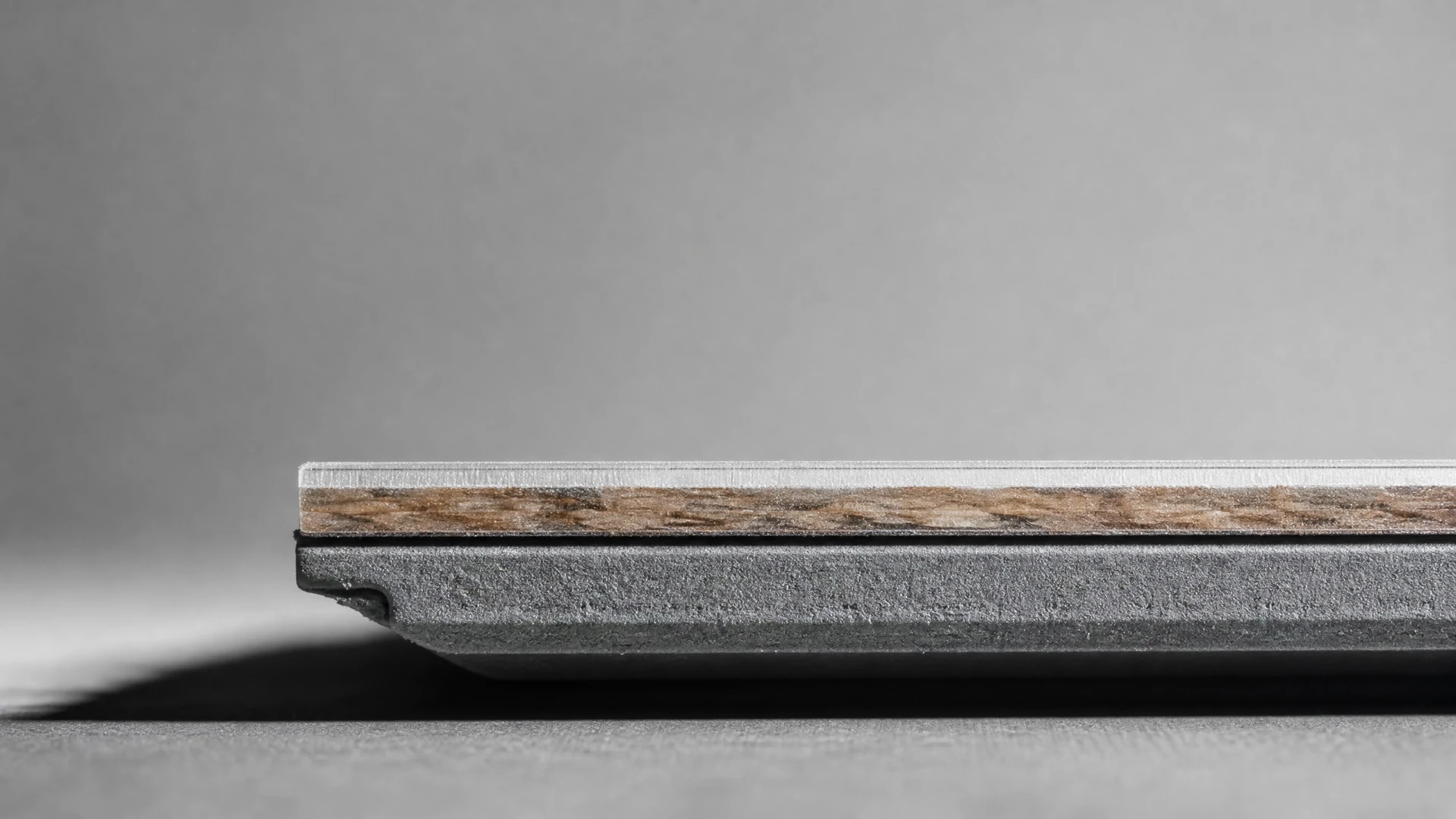
Quick answer: Luxury vinyl plank has two thickness numbers and they measure completely different things. Overall thickness is in millimeters and tells you how the floor feels underfoot. The wear layer is in mils, one thousandth of an inch each, and it is the only one that predicts how long the floor lasts. They do not track together. A substantial 10mm plank can carry a 12 mil wear layer while a thinner 5mm plank carries 20 mil, and the thin one will still be there when the thick one is worn through. When you compare two planks, compare mils.
Picking up two samples and choosing the heavier one is a completely reasonable instinct. It is also the single most common expensive mistake in vinyl flooring, and almost nothing on a shelf tag corrects it.
A mil is one thousandth of an inch. A human hair is roughly three to four mils thick.
The wear layer is the clear coating sitting above the printed design layer. Everything that scratches your floor, whether that is grit tracked in from the driveway, a dog's nails, or a chair dragged across the kitchen, hits the wear layer first. When it wears through, the printed pattern goes with it, and there is no refinishing a vinyl floor. That is the end of it.
Overall thickness, the millimeter number, affects something real but different: how solid the floor feels, how much sound it absorbs, and how well it bridges small imperfections in the subfloor. Useful. Just not a durability spec.
Manufacturers tie warranty length directly to this number. A 20 mil product typically carries lifetime residential coverage with a light commercial term alongside it. A 30 mil product carries longer commercial terms. When a manufacturer is willing to stand behind a floor for decades, that is a real signal, and it is priced into the product.
Our own warranty page lists 15 to 25 year residential wear coverage on luxury vinyl, and the position within that range is largely a wear layer question.
A practical way to spend the budget: rather than putting one mid-range product everywhere, put 20 mil where the traffic actually is, meaning the kitchen, entry, and main hallway, and something lighter in bedrooms. Total cost often lands close, and the floor ages far more evenly.
Rigid core vinyl comes in two flavors, and in this part of Texas the choice has real consequences.
SPC is stone plastic composite. The core is dense and stiff with no foaming agent. It is harder, more resistant to denting, and it handles being installed over an existing hard surface, including imperfect tile, better than the alternative. It also runs colder underfoot, because a stone composite core does not hold much heat.
WPC is wood plastic composite. The core includes a foaming agent, which makes it softer, warmer, quieter, and more comfortable to stand on. The tradeoff is that it dents more easily under heavy furniture or point loads.
Why this matters here specifically. A great many homes in Spring, The Woodlands, Conroe, and across greater Houston sit on concrete slabs. Slabs are rarely perfectly flat, and a dense SPC core is more forgiving of that than a foamed one. If you are going over existing tile rather than tearing it out, SPC is usually the answer.
Where WPC earns its place is comfort. A kitchen where someone cooks for two hours a day is a different problem from a hallway, and standing on a dense stone core all evening is noticeably less pleasant.
Attached underlayment. Some planks come with a pad already bonded to the back. It helps with sound and small subfloor variation, and it means you are not buying and installing separate underlayment. Ask whether it is included, because two quotes are not comparable if one of them needs a pad added.
Waterproof versus water resistant. Nearly all rigid core LVP is waterproof as a material, meaning the plank itself will not swell. That is not the same as the installation being waterproof. Water can still reach the subfloor through seams and edges and sit there.
Waterproof plank is a very good idea in a bathroom. It is not a substitute for dealing with a leak.
Plank size and the room. Wider, longer planks read as more expensive and make a room feel larger, with fewer seams. They are also less forgiving of an uneven subfloor, because a long rigid plank bridges high spots and can flex or click. In an older house with a wavy floor, a narrower plank is often the better outcome even if the wide one photographs better.
We sell a lot of it and it is not right for everything.
You want a floor that can be refinished. Vinyl cannot be. When the wear layer is gone the floor is replaced. Solid hardwood can be sanded and refinished many times over decades, and if you are planning to stay for thirty years that math can favor wood.
Direct, sustained sunlight. Strong sun exposure over years can fade vinyl and, in extreme cases, cause expansion in a floor that was installed without adequate expansion gap. Big south-facing glass changes the calculation.
You want maximum resale appeal in a high-end home. In some price brackets buyers expect real wood, and vinyl reads as a compromise regardless of quality.
Radiant heat without checking first. Many rigid core products are compatible, and many have a maximum surface temperature. Confirm the specific product rather than assuming.
You will get a straight answer faster with these:
What does mil mean in vinyl plank flooring?
A mil is one thousandth of an inch, and it measures the clear wear layer over the printed surface. It is not the same as the plank's overall thickness, which is measured in millimeters. The wear layer determines how long the floor resists scratching and wear.
Is thicker vinyl plank always better?
No. Overall thickness in millimeters affects how the floor feels and how it handles subfloor imperfections, but the wear layer in mils determines longevity. A 10mm plank with a 12 mil wear layer will wear through before a 5mm plank with a 20 mil wear layer.
What wear layer do I need with dogs and kids?
Generally 20 mil or higher in the spaces that actually get traffic, meaning kitchens, entries, and main hallways. 12 mil is reasonable in bedrooms and lower-traffic rooms. Mixing wear layers by room is a legitimate way to spend the budget where it matters.
Should I choose SPC or WPC?
SPC has a dense stone composite core that resists dents and tolerates imperfect subfloors better, which suits high traffic and installations over slab or existing tile. WPC has a foamed core that is softer, warmer, and quieter underfoot but dents more easily. Many homes use both, in different rooms.
Is waterproof LVP really waterproof?
The plank itself will not swell, which is genuinely useful. But water can still travel through seams to the subfloor and sit there. Treat waterproof as strong protection against spills and mopping, not as a reason to leave a leak unaddressed.
Can LVP be refinished when it wears out?
No. Unlike hardwood, vinyl cannot be sanded and refinished. When the wear layer is gone the floor is replaced, which is precisely why the wear layer specification deserves more attention than it usually gets.
If you are comparing products anywhere, bring a photo or a sample and we will tell you the wear layer, the core type, and what it should cost at your square footage. We carry our own collections, including Lonestar Luxury Vinyl, Plus, and Max, and we will show you where each one lands on the table above rather than describing the color.
Lonestar Flooring and Cabinets, 1208 W Riley Fuzzel Rd, Spring, TX 77373. Call (281) 364-7788. Open weekdays 9 to 5, serving Spring, The Woodlands, Conroe, and greater Houston.
Texas Style Wholesale.
Related reading:- Products and collections- Warranty- LVP flooring in bathrooms: is it right for your Spring TX home?- Laminate vs hardwood flooring in Spring TX- Contractors
Wear layer service-life ranges and SPC and WPC core characteristics reflect published industry guidance and vary by manufacturer; confirm the specification for any product before purchase. Warranty ranges cited from our own warranty page. This article describes product categories generally rather than any specific manufacturer's current line.

.svg)
.svg)