September 19, 2026
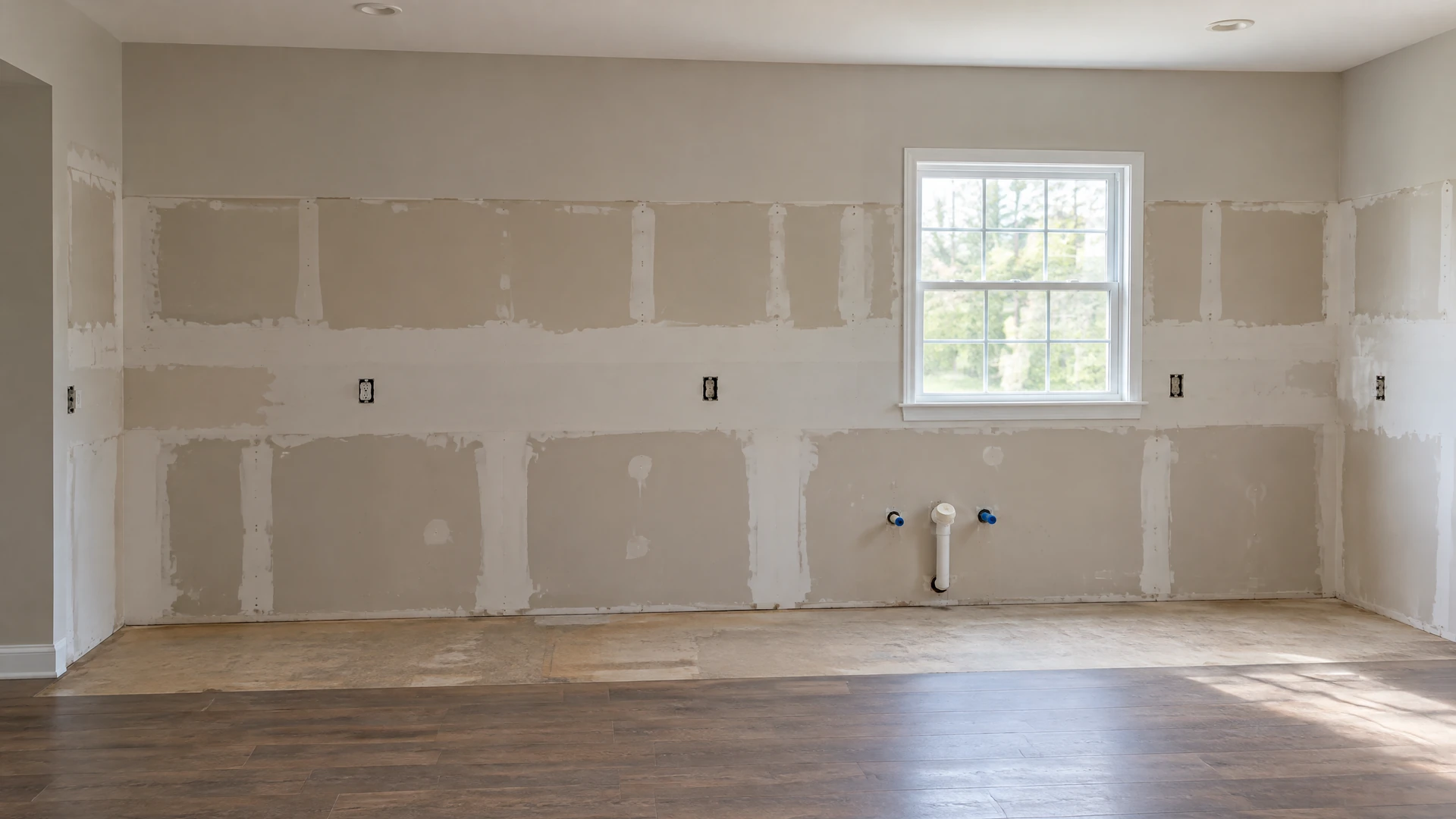
The three cabinet tiers are usually explained as good, better and best. That is wrong. They are better understood as three different answers to one question: how much of your kitchen is a standard size? Stock cabinets come in fixed increments and ship fast. Semi-custom lets you modify a standard box and takes weeks. Custom builds to your exact dimensions and takes months. A well built stock cabinet beats a poorly built custom one, and the certification below tells you which is which regardless of tier.
The tier you need is mostly determined by your walls, not by your budget. That is the part people work out too late, usually after they have fallen for a door style.
Stock cabinets are manufactured in advance in fixed widths, typically 3 inch increments. You are choosing from an existing catalog of sizes. If your run of wall is 121 inches and the cabinets come in 3 inch steps, you fill what you can and finish with filler strips. Availability is measured in days, sometimes same day from a warehouse.
Semi-custom starts from a standard box and permits modifications: a cabinet made 2 inches shallower to clear a walkway, a different door style, a specific interior configuration, a wider range of finishes. You are still buying a production cabinet, just one built to order with options. Lead times commonly run in the several week range.
Custom means built for your kitchen, at your dimensions, in whatever material and finish you specify. Nonstandard ceiling heights, an angled wall, an island that has to be one specific size, a species nobody stocks. Lead times commonly run months, and the number moves with the shop's backlog.
Note what is not in that table: quality.
Quality tracks construction and certification, not tier. There are excellent stock lines and there are custom shops turning out boxes that will sag in five years.
ANSI/KCMA A161.1 is the cabinet industry's performance standard, and cabinets certified to it carry a seal. It is worth knowing what a certified cabinet has actually survived, because the tests are specific and physical.
Certified cabinets are loaded to 15 pounds per square foot on shelves and bottoms and held there for seven days. Wall cabinets are gradually loaded to 600 pounds to test the mounting system. Drawers are loaded and cycled 25,000 times. Doors are swung through a full 90 degrees 25,000 times. A 3 pound steel ball is dropped onto surfaces from 6 inches, and a 10 pound sandbag is swung against doors.
The finish tests are where it gets interesting. Certified finishes are exposed to vinegar, lemon juice, orange juice, grape juice, tomato catsup, coffee, olive oil and 100 proof alcohol for 24 hours, and to mustard for one hour. They sit for 24 hours at 120 degrees and 70 percent humidity, then cycle five times between an hour at 120 degrees and an hour at negative 5 degrees.
That last one matters more here than it sounds. A finish that fails thermal cycling is a finish that will not enjoy a Houston kitchen in August.
Ask whether a line is certified. It is a yes or no question with a verifiable answer, and it is more informative than any adjective in a brochure.
Beyond certification, a few things separate cabinets that last from cabinets that look fine on day one.
The box material. Plywood handles moisture better than particleboard and holds screws better over time. Particleboard is not automatically bad, and a good particleboard box with proper edge banding outperforms cheap plywood. But under a sink, in a climate like ours, plywood is the safer specification.
Drawer construction. Dovetailed solid wood drawer boxes with full extension soft close undermount glides are the durable configuration. Stapled butt joints with side mount roller glides will annoy you within two years.
How the back attaches. A full back panel captured in a groove keeps the box square. A thin back stapled on is what lets a cabinet rack out of square when it gets loaded.
Cabinets set the critical path on nearly every kitchen remodel, and people order them last.
The sequence that actually works: measure and order cabinets first, then schedule everything else around the delivery date. Countertops cannot be templated until the cabinets are set. Plumbing and electrical rough in has to know where the boxes land. Flooring decisions interact with cabinet height, especially if you are going under the cabinets rather than up to them.
When someone chooses custom cabinets in month one of a remodel without asking the lead time, they frequently discover in month three that the entire project is parked waiting on a delivery that was always going to take that long. The cabinets were not late. The schedule was built without them.
If you are working to a hard date, a holiday, a birth, a closing, ask for the lead time in writing before you commit to a tier, and add buffer. Lead times quoted at the point of sale are estimates, and they move.
This is where a flooring and cabinet supplier under one roof genuinely helps, and it is a small detail with expensive consequences.
If flooring runs under the cabinets, the cabinet height rises by the floor thickness, which changes the countertop height and the appliance openings. If the flooring stops at the cabinet toe kick, you have a cleaner material transition but a harder time later if you ever change the floor without changing the cabinets.
For a floating floor, there is a further constraint. A floating floor must be free to move, so running it under a cabinet run pins it in place and defeats the installation. In most cases floating floors should stop at the cabinets with an expansion gap concealed by the toe kick.
Deciding this after the cabinets are ordered is how people end up with a dishwasher that will not fit back under the counter.
Plenty of kitchens do not need semi-custom, let alone custom.
If your layout is standard, if you are working on a rental or a flip, if you need the kitchen back in three weeks, or if the budget is better spent on countertops and appliances, a certified stock line in a good finish is a completely defensible choice. Nobody walks into a kitchen and detects a 3 inch filler strip.
Spend the money on custom where custom solves a real geometry problem. Spend it on finish and hardware where you touch things every day. Those are the two places it shows.
How long do custom cabinets take?
Commonly several months from order to delivery, depending on the shop's backlog, the material and the finish. Get the current lead time in writing at order, because published lead times and actual lead times diverge when a shop is busy.
Are stock cabinets lower quality than custom?
Not inherently. Tier describes sizing flexibility, not build quality. A KCMA certified stock cabinet with a plywood box and dovetail drawers will outlast an uncertified custom cabinet built from thin particleboard.
What does KCMA certification actually mean?
The cabinet line passed a series of third party structural and finish tests under ANSI/KCMA A161.1, including 25,000 door and drawer cycles, a 600 pound wall mount load, and exposure to common kitchen substances. It is a floor on quality, not a ceiling.
Should flooring go under kitchen cabinets?
Usually not for floating floors, which need room to move and get pinned by cabinet runs. Glue down and nailed floors can run under cabinets. Decide before the cabinets are ordered, because it affects finished counter height.
Can I mix cabinet tiers in one kitchen?
Yes, and it is a good budget tactic. Use stock for the standard runs and a semi-custom or custom piece for the island or the one wall with an odd dimension, as long as the door style and finish are available across both.
Is refacing worth it instead of replacing?
It can be, when the boxes are structurally sound and square and the layout is not changing. If the boxes are particleboard and swollen, or if you are moving anything, refacing puts a new face on a problem you will still have.
Bring the wall dimensions, ceiling height, and photos including the corners. Corners are where cabinet plans go wrong. We will tell you honestly whether your kitchen needs custom or whether stock will do the job for less money and three months less waiting.
Lonestar Flooring and Cabinets1208 W Riley Fuzzel Rd, Spring, TX 77373(281) 364-7788Serving Spring, Klein, The Woodlands, Conroe, Tomball, Porter and greater Houston
Related reading: How to Judge Cabinet Quality, Flooring for Slab Foundations in Spring TX
Building or remodeling at volume? See our contractor and builder programs.
Texas Style Wholesale

.svg)
.svg)