October 20, 2026
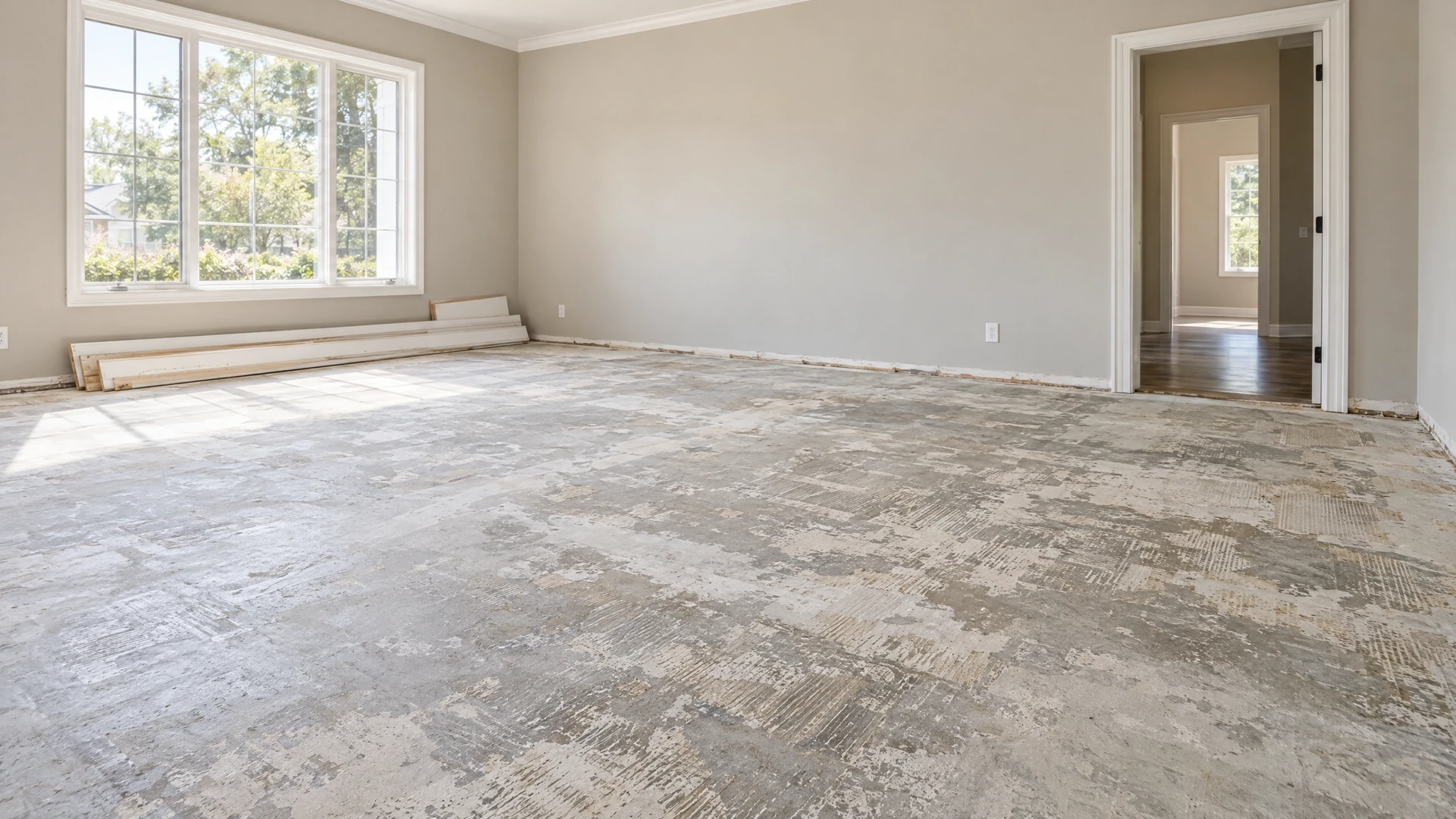
Two quotes can show the same price per square foot and end up thousands apart, because that number is not a standard unit. One quote may cover material only. Another may include tear-out, disposal, subfloor prep, underlayment, transitions and trim. The single most useful thing you can do with a flooring bid is make every line visible, because the gap between quotes is almost never the flooring. It is what each contractor assumed you already knew was excluded.
This is not usually dishonesty. Different companies quote differently by habit, and a homeowner comparing two numbers side by side has no way to know what each one silently left out. Here is the full list.
Material. The flooring itself, priced per square foot. Confirm which product and which specification, because the spec is what makes the number meaningful.
Waste and overage. Nobody installs exactly the square footage of the room. Cuts, pattern and room shape all add material. If a quote covers only your measured square footage, it is short, and you will find out mid install.
Underlayment or vapor barrier. Required for most floating installations, and on a Houston slab a moisture barrier is not optional. Sometimes built into the plank, sometimes a separate line, sometimes missing.
Tear-out of the existing floor. Pulling carpet and pad is quick. Removing glued-down vinyl, or tile set in thinset, is slow and can be the single most expensive labor line in the job.
Disposal. Old flooring has to go somewhere, and dump fees are real. Tile and mortar are heavy, and weight is what dumps charge for.
Subfloor preparation. Grinding high spots, filling low spots with self leveling compound, replacing damaged decking. On slab homes here, this is the line most often discovered rather than quoted, because nobody can see the slab until the old floor is up.
Moisture testing. On a concrete slab this should happen before material is ordered. Ask whether it is in the bid.
Transitions and trim. Thresholds between rooms, stair nose, reducers where the new floor meets a different height, quarter round or new baseboard. Small pieces, surprisingly not small money.
Door undercutting. Doors and casings often need trimming to clear the new floor height. Usually minor, occasionally not.
Furniture and appliance moving. Some crews include it, many do not. Refrigerators, pianos and anything requiring a disconnect are commonly excluded by default.
Stairs. Quoted per tread, not per square foot, and they are labor intensive. A quote that folds stairs into the field square footage is either wrong or about to be revised.
Labor. Sometimes bundled into a single installed number, sometimes separate. Either is fine as long as you know which you are reading.
Reduce every bid to two figures and the comparison gets easy.
If a contractor cannot give you both, that is information.
In this area, almost all of them come from the same three places.
The subfloor nobody could see. Once the old floor is up, the slab is visible for the first time. Flatness problems and moisture problems both live here, and both cost money to fix. A good bid handles this by naming a prep allowance and a rate for work beyond it, so you are not negotiating mid job. Our piece on what Houston clay soil does to a slab explains why this is more common here than in most markets.
Tear-out that turns out to be harder than it looked. Glued vinyl over concrete and tile over a mortar bed are the two usual offenders.
Material shortfall. Ordering to the exact measurement, or underestimating waste on a pattern layout, means a second order, a second delivery and possibly a different production run. That last part is the expensive one.
A quote is a price from a specific party, and the parties are not interchangeable.
Some flooring is sold and installed by the same company. Some is sold by a retailer who subcontracts the installation to a crew you will not meet until they arrive. Some is bought as material only, with the homeowner hiring labor separately. All three are legitimate, and they carry different answers to one question: when something goes wrong, who fixes it?
If the material and the labor come from two different companies, a problem can become an argument about whether the product failed or the installation did. That argument happens at your expense, in your house, with your floor in pieces. When they come from one source, there is nobody to point at.
Worth asking on any bid: is the crew employed or subcontracted, are they insured, and who holds the workmanship warranty and for how long. A manufacturer's warranty covers the product. It does not cover an installation error, and installation error is the more common cause of a failed floor.
Ask all of these, of every bidder, and write the answers in a column:
Nine questions. They convert three incomparable numbers into three comparable ones, and they routinely change which bid is actually cheapest.
Plenty of bids are low because the contractor is efficient, buys well, or wants the work. Low is not a red flag by itself.
What is worth a second look is a bid that is low because it excludes things the others include. That is not a cheaper job, it is the same job with the cost moved to a change order later, and change order pricing is not competitive pricing. You have no leverage once the floor is up.
The bid worth trusting is the one that names its assumptions out loud, including the uncomfortable ones. A contractor who writes down what happens if the slab needs leveling is telling you they have seen it happen.
Does a flooring quote usually include removing the old floor?
Not always, and this is one of the most common gaps between bids. Carpet removal is cheap, but glued vinyl and tile removal is labor intensive and can be a major line. Ask explicitly whether tear-out and disposal are included.
What is subfloor prep and why is it not in the quote?
It is grinding, leveling or repairing the surface under the floor. It is frequently excluded because nobody can see the subfloor until the old floor is removed. A good bid names a prep allowance and a rate beyond it.
Why is the installed price so much higher than the material price?
Material is often less than half a finished floor. Labor, tear-out, disposal, prep, underlayment, transitions and trim make up the rest. Comparing a material price against an installed price is the most common quoting mistake.
Should stairs be quoted separately?
Yes. Stairs are priced per tread because they are far more labor intensive than field area. A quote that buries stairs in the room square footage is likely to be revised once the crew sees them.
Is the lowest flooring bid usually a bad sign?
Not by itself. It becomes a concern when it is low because it excludes work the other bids include, since that cost returns later as a change order without competitive pressure on the price.
What should I do if the installer finds problems mid job?
Refer to the prep allowance and the agreed rate in the contract. This is exactly why that language matters, and it is why it is worth asking for before anyone starts.
Does the manufacturer warranty cover installation problems?
No. A manufacturer warranty covers the product itself. Installation errors are covered by the installer's workmanship warranty, if there is one. Since installation error is the more common cause of a failed floor, ask who holds that warranty and how long it runs.
Bring any flooring quote, from us or from anyone, and we will read it line by line and tell you what it does and does not cover. That costs nothing and it is the fastest way to find out whether you are comparing the same job twice.
Lonestar Flooring and Cabinets 1208 W Riley Fuzzel Rd, Spring, TX 77373 (281) 364-7788 Serving Spring, Klein, The Woodlands, Conroe and greater Houston
Related reading: How Flooring Pricing Actually Works, Flooring on a Houston Slab, Flooring and Insurance Claims in Texas
See financing options or browse our collections.
Texas Style Wholesale