October 26, 2026
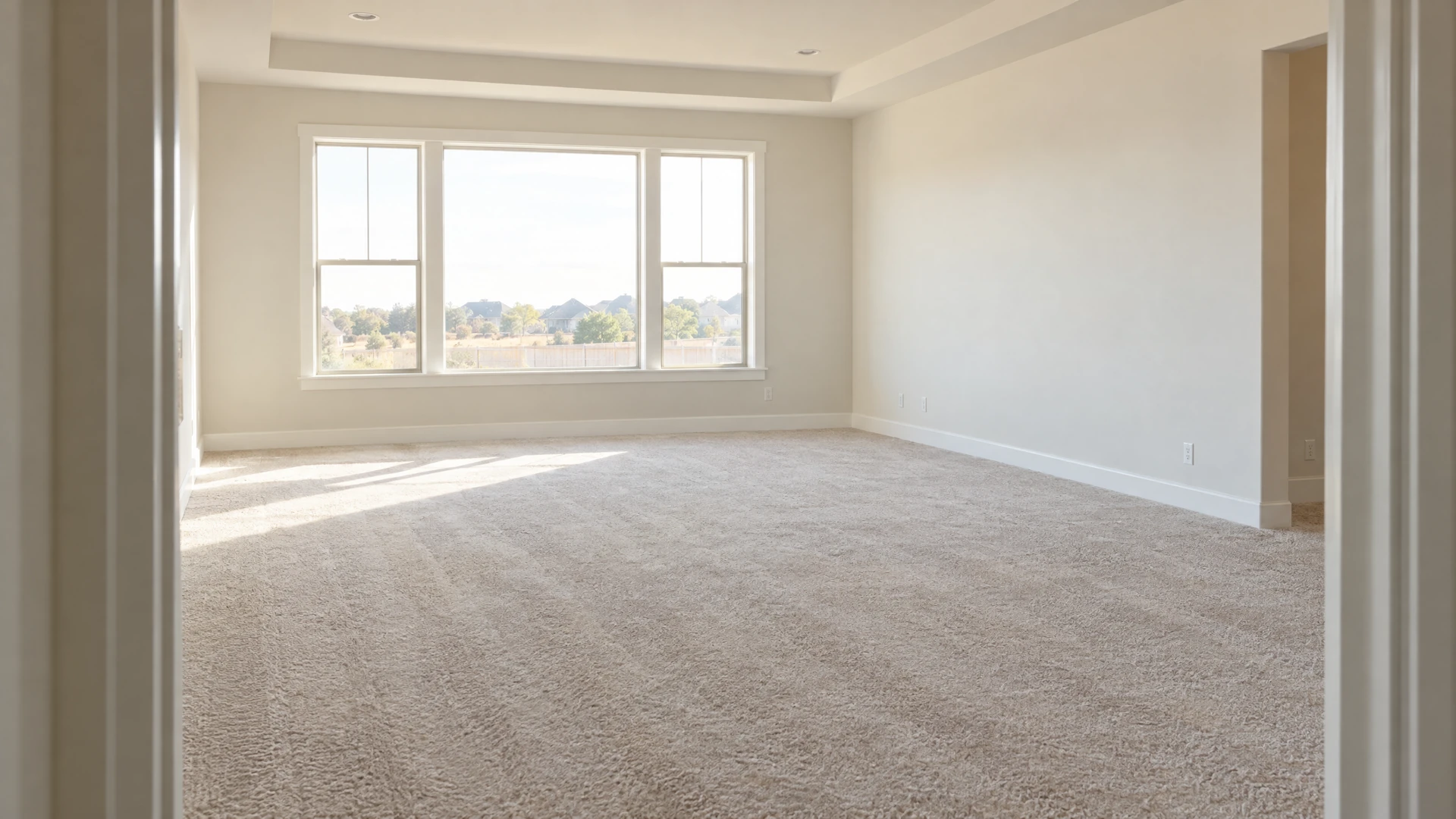
Taking the builder's upgrade rolls the cost into the mortgage and gets the floor installed before you move in, which is worth real money in convenience. Replacing later almost always buys more floor for the money, because you are not paying a builder's margin on a selection made from a small sample board. The deciding factor is usually cash and disruption rather than price. If you can pay for flooring outside the loan and you can tolerate the work happening around you, replacing later usually wins on value. If neither of those is true, take the upgrade.
This decision comes up constantly in the new construction around Spring, Klein and Tomball, and the advice people get is usually whichever answer benefits the person giving it. Here is the case for each.
It is not an insult and it is not a standard. It describes the specification a builder selects for a base package: typically the product that meets code and warranty requirements at the lowest cost that still looks acceptable in a model home.
In flooring, that usually means carpet with a modest face weight and a basic pad, and on hard surface a thinner wear layer than most people would choose if they were reading the spec sheet. It is not defective. It is specified to a price, and it will wear faster than a mid grade product because that is what the numbers say it will do. Our guide to wear layer and core construction explains what those numbers mean.
It goes in the mortgage. This is the strongest argument and it is a real one. Financing the upgrade at a mortgage rate over thirty years is different from paying for a floor in cash next spring, and for many buyers it is the difference between having the floor they want and not.
It happens before you move in. No furniture to move, no living in two rooms for a week, no dust. This is worth more than people expect, particularly with kids or pets.
No second disruption. The floor is done once, by the builder's crew, under the builder's schedule.
It is covered by the builder's warranty. One party is responsible for the house including the floor, which simplifies any problem in the first year.
Selection. You are choosing from the builder's options, usually presented as small samples in a design center under lighting that resembles nothing in your actual house. Replacing later means choosing from the whole market, with samples you can take home and look at in the real rooms at the real times of day.
Specification. Builder upgrade tiers are often described by look rather than by numbers. Buying independently, you can ask for the wear layer, the warranty and the construction, and compare like for like.
Price for what you get. A builder upgrade includes the builder's margin and overhead on the change. Buying material and installation independently generally buys more floor for the same money, which is the entire reason this question exists.
You will know the slab. After closing, a moisture test can be run and the slab assessed before a product is chosen. Pre-closing, you are specifying a floor for a slab that may not be poured yet. On new construction in this area that is a genuine issue, because a young slab is still giving up moisture. Our piece on flooring over a Houston slab covers why that matters here more than in most markets.
Replacing later means tearing out flooring that is brand new and throwing it away.
That is money you already paid, inside the price of the house, going into a dumpster. It does not appear on any quote, which is exactly why it gets left out of the comparison. If you are fairly sure you will replace the carpet within two years, it is worth asking the builder whether a lower base option exists, or whether the allowance can be reduced, so you are not paying twice for the same floor.
Builders vary enormously in how much flexibility they will offer here, and the answer is often no. It costs nothing to ask.
If the builder's base flooring in a wet area is a product you already know is wrong for the space, do not plan to fix it later.
The specific case is carpet in a room that should never have carpet, or a laminate product going somewhere it will meet water. Living with it for a year while it absorbs a spill or two is not neutral, because the subfloor underneath can take damage that outlasts the flooring. Sorting that out at the design center is cheaper than sorting it out after.
The same logic applies to stairs. Stair work is labor intensive and disruptive to redo, so it is one of the better things to get right the first time.
Take the upgrade on anything structural or hard to redo later, including stairs and wet areas. Take the base option on bedroom carpet, which is the easiest thing in the house to replace, the least disruptive, and where builder grade carpet wears out fastest anyway.
Then, once you have closed and lived in the house for a season, replace the carpet with something specified properly. You will have seen how the light works, how the traffic actually flows, and whether the layout you imagined matches the one you use.
That split captures most of the value of both approaches, and it is what we would do ourselves.
Is builder grade flooring bad quality?
It is not defective, it is specified to a price. Builder base flooring typically has a thinner wear layer or a lower carpet face weight than a mid grade product, so it wears faster. It meets code and warranty requirements.
Is it cheaper to upgrade flooring with the builder or after closing?
Replacing after closing generally buys more floor for the money, because a builder upgrade includes the builder's margin. The builder option's advantage is that it is financed in the mortgage and installed before you move in.
Can I ask the builder to skip the flooring?
You can ask. Some builders will reduce an allowance or offer a lower base option, many will not, because it affects the certificate of occupancy and the warranty. It costs nothing to ask, and it avoids paying twice if you intend to replace it.
How long should I wait before replacing new construction flooring?
There is no fixed period, but living in the house through a season tells you how the light and traffic actually work. On a new slab it also allows a moisture reading before a new floor is specified.
Which rooms are worth upgrading with the builder?
Stairs and wet areas, because both are disruptive and expensive to redo. Bedroom carpet is usually the best candidate for taking the base option and replacing later, since it is the easiest and least disruptive room to change.
Will replacing builder grade flooring add resale value?
It generally improves how a house shows, particularly replacing carpet in main living areas. Treat it as a livability and presentation decision rather than an investment with a predictable return.
If you are choosing at a design center right now, bring the options list or a photo of the samples. We will tell you what the specifications actually are, what the equivalent would cost independently, and which rooms are genuinely worth upgrading now rather than later.
Lonestar Flooring and Cabinets 1208 W Riley Fuzzel Rd, Spring, TX 77373 (281) 364-7788 Serving Spring, Klein, The Woodlands, Conroe, Tomball and greater Houston
Related reading: How Flooring Pricing Actually Works, What Is Actually in a Flooring Quote, Buying Flooring at Volume, How to Choose Carpet
Browse our collections or see financing options.
Texas Style Wholesale